
And with no fanfare the 400 mile goal is broken.
Posted from WordPress for Android

Here you can read/hear the ramblings of a pretty boring guy
And with no fanfare the 400 mile goal is broken.
Posted from WordPress for Android

398 miles down only 2 more to break the goal of 400!
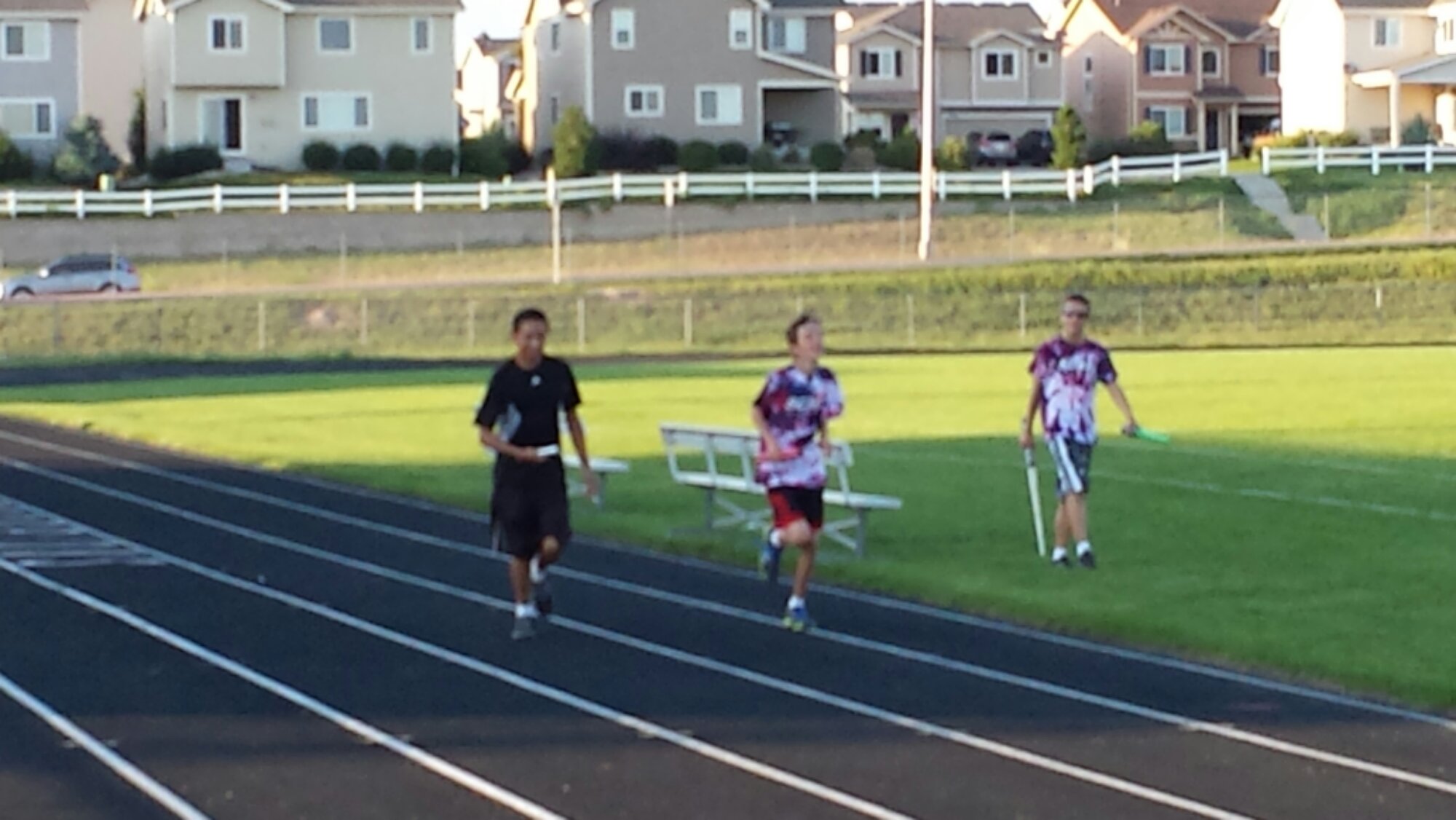
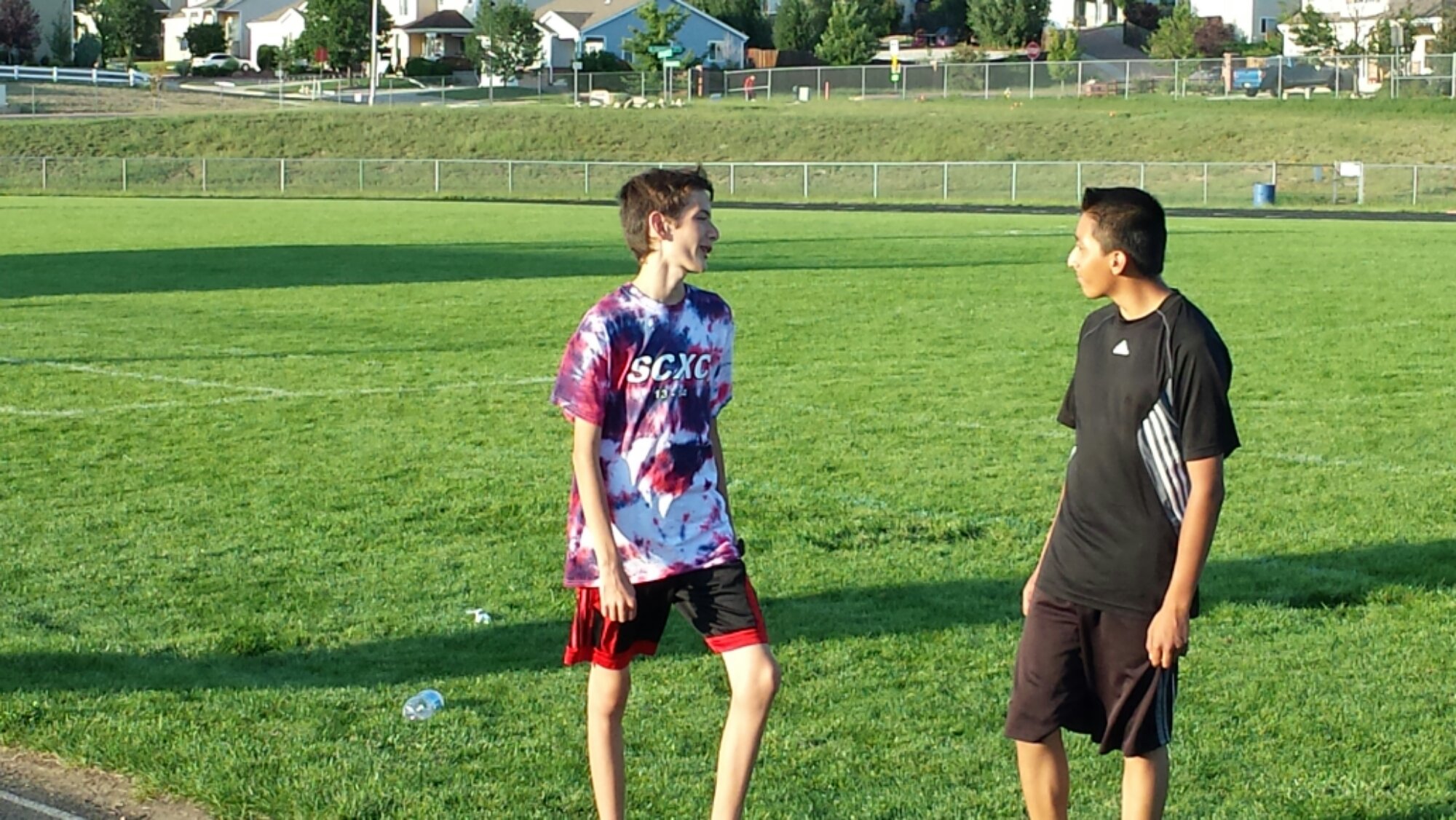
The boy getting ready to run his first leg at the 24hr SCHS X Country marathon. He’s got 4 more.
Four members of the Sand Creek Cross country team just stopped at the house, because one of the boys got stung by a bee and they said, “Mr. Thuis would know what to do and would help”.
We checked for stinger (none), checked for allergic reaction (none), and treated with a paste of meat tenderizer and water (don’t know if it really works, but the placebo effect seemed to work)… and off they went.
I guess I should be honored they knew to come here. via Facebook
I am blessed with having one of the easiest jobs ever. So why am I surrounded by people who insist on making it harder with frivolous B.S.? via Facebook
Don’t wake me… I’m working. via Facebook
 If you judge the Scoutmaster Handbook by its cover, you might assume it’s solely meant for, well, Scoutmasters.
Assistant Scoutmasters, it seemed, were to look elsewhere for Scouting wisdom.
That’s about to change. Later this year, the two-volume Troop Leader Guidebook will debut, replacing the Scoutmaster Handbook and offering helpful checklists, quick tips and fresh ideas for both new troop leaders and veteran Scouters.
Scouting magazine contributor Mark Ray wrote Volume 1, while Bob Birkby, author of the latest Boy Scout Handbook, penned Volume 2.
You can see the covers of the new Troop Leader Guidebooks after the jump. I’ve also got a sneak peek at what’s inside the books and what makes them better tools for Scoutmasters and assistant Scoutmasters.

Click to enlarge
Mark Ray’s Vol. 1 focuses primarily on the needs of the new or relatively inexperienced Boy Scout leader.
These Scouters will have been volunteers for up to three years, are likely assistant Scoutmasters and probably recently crossed over from serving as a Webelos leader or parent.
As such, Volume 1 assumes little or no prior knowledge of the Boy Scout program on the part of the reader. It presents a somewhat simplified picture of Boy Scouting that focuses on the short term — getting through this week’s troop meeting, this month’s outing and this year’s planning conference — rather than the long term, such as planning for growth, establishing a troop vision, and measuring personal and troop success.
In other words, it leaves advanced topics to Volume 2.
Given that its readers are mostly newcomers, this volume’s tone is similar to that used in a book for new parents. It reassures readers that everything is really going to be okay. Really.

Click to enlarge
Bob Birkby’s Volume 2 assumes its readers are ready for the next level.
Here you’ll find info like high-adventure planning, working with Scouts with disabilities, conflict resolution, visioning and more.
This volume is for more-seasoned leaders who need fresh ideas. It’s an advanced guidebook that will help leaders take their troop’s program and operations to a higher level. It will also help leaders keep an established program fresh and exciting so that troops don’t fall into the trap of doing the same things year after year.
Look at it this way: Volume 1 replaces the current Scoutmaster Handbook, while Volume 2 offers advanced guidance that’s been missing from several editions of the Scoutmaster Handbook.
“By the way,” Mark tells me, “we changed the name because surveys indicated that many assistant Scoutmasters thought the Scoutmaster Handbook wasn’t for them!”
But more than just a new name, the Troop Leader Guidebook represents a new approach to serving all troop leaders. And it happened, as it should, with the input of Scouters like you.
“We held focus groups in the spring of 2012 in the D.C. area (Northeast and Southern Regions), the St. Louis area (Central Region), and the Bay Area (Western Region) to get input on the current handbook and what Scouters wanted to see in the new handbooks,” Mark says.
So the two-volume Troop Leader Guidebook is truly designed by Scouters for Scouters. Look for both volumes to be released together later this year.


Thunder/Wintry Mix Currently 59F.
 Play around with a knife, lose a corner on your Totin’ Chip. In my troop growing up, it was that simple.
If a Scout lost all four corners of his Totin’ Chip (essentially a Scout’s license to carry pocketknives, axes and saws), his blade-carrying privileges were revoked until he re-earned the card.
It’s all part of Boy Scouting’s well-reasoned approach to teaching boys to see pocketknives, axes and saws as tools, not toys.
But it’s the corner-cutting business that was on the mind of a Scouter who asked to remain anonymous. He sent me this email:
Bryan,
I just got back from [Introduction to Outdoor Leadership Skills training], and in the ax, saw and knife section of the class, the topic of Totin’ Chip came up. Participants and staff mentioned how in their troops, they cut the corner off the card when a Scout commits an infraction.
It was my impression before attending this session that, although popular procedure before, that this is no longer allowed in the Boy Scouts of America.
What do today’s official rules say on this matter?
Yours in Cheerful Service,
Anonymous
Great question, Anonymous. And thanks for the email.
I checked with Bill Evans, the BSA’s subject-matter expert on all awards and recognitions. He pointed me to the last line of the BSA’s Totin’ Chip guidelines: “The Scout’s ‘Totin’ Rights’ can be taken from him if he fails in his responsibility.”
“This is all we say,” Bill said. “Period.”
In other words, the BSA doesn’t tell troops they must cut corners off for Totin’ Chip violations, but it doesn’t prohibit the practice either.
This is a decision for troop leaders, and I’d recommend including your senior patrol leader in the discussion as well. Set a standard, and enforce it.
The Whittling Chip, which is for Cub Scouts
I can’t track down all the answers, but send your Ask the Expert questions to me and I’ll do my best.
Photo from Flickr: Some rights reserved by herzogbr


